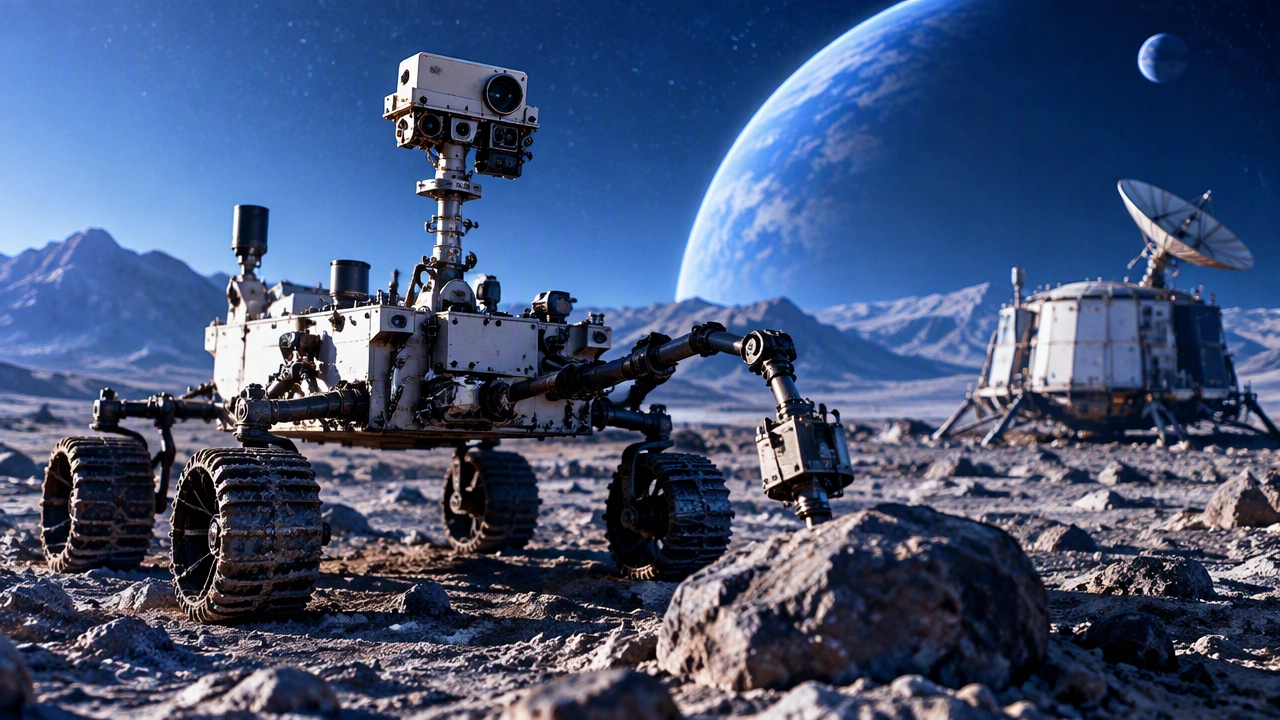
The Role of Robotics in Space Exploration Missions: Expanding Humanity’s Reach Across the Solar System
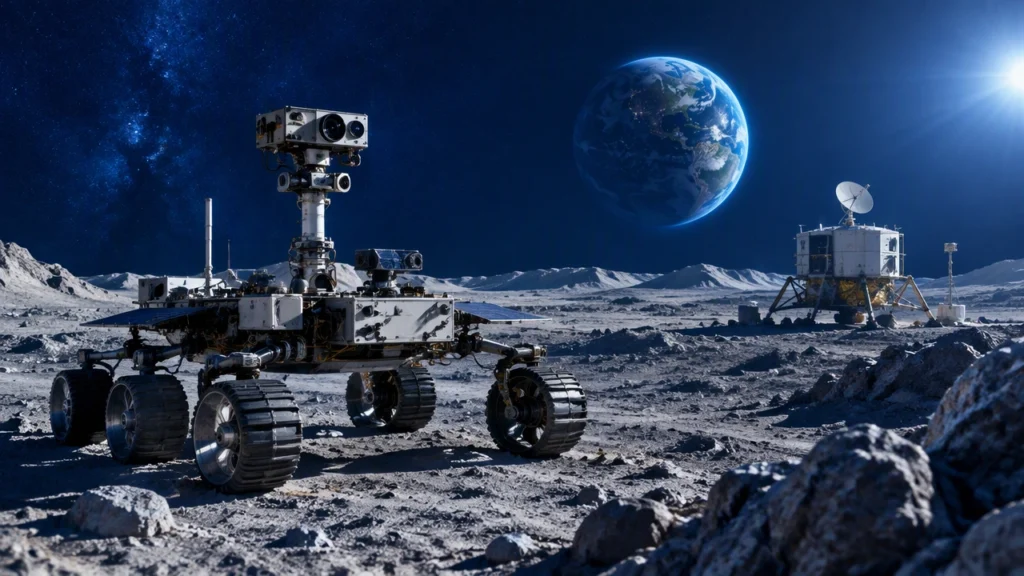
In the domain of nauka i badania, few developments have transformed scientific discovery as profoundly as robotic missions in space. From autonomous rovers traversing Martian terrain to spacecraft navigating the outer reaches of the solar system, robotics has become indispensable to humanity’s quest to understand the cosmos. These systems extend our senses and capabilities far beyond what crewed missions alone could achieve, operating in environments too distant, too hazardous, or too prolonged for human presence.
The role of robotics in space exploration missions is not merely supportive; it is foundational. Every major space agency today depends on autonomous and semi-autonomous systems to conduct research, gather data, and push the boundaries of what is scientifically and technologically possible.
Why Robotics Is Essential for Deep-Space Exploration
Space presents challenges that are fundamentally incompatible with unassisted human exploration. Radiation exposure, extreme temperature fluctuations, communication delays spanning minutes or hours, and the sheer distances involved all impose severe constraints. Robotic systems address these challenges by operating reliably in conditions where human survival would be precarious or impossible.
A spacecraft traveling to Jupiter, for instance, faces a communication delay of roughly 35 to 52 minutes each way. Real-time human control from Earth is impractical. Autonomous systems must therefore interpret sensor data, make navigational decisions, and execute scientific procedures independently. This requirement has driven decades of innovation in onboard computing, artificial intelligence, and fault-tolerant engineering.
Beyond survival, robots offer endurance and precision that biological explorers cannot match. A rover can operate for years without rest, conducting repetitive measurements with exacting consistency. Instruments mounted on robotic platforms can be calibrated and maintained with a level of rigor that supports long-term datasets essential for comparative planetary science.
Mars Rovers and Landers: Pioneers of Autonomous Science
Mars serves as the most prominent proving ground for robotic exploration. NASA’s Spirit and Opportunity rovers, which landed in 2004, demonstrated that mobile robots could conduct sustained geological investigations across varied terrain. Opportunity operated for nearly 15 years, far exceeding its planned 90-day mission.
The Curiosity rover, which arrived in 2012, introduced a more sophisticated suite of analytical instruments, including a laser-based spectrometer capable of analyzing rock composition from a distance. Curiosity’s Sample Analysis at Mars instrument suite can heat soil and rock samples to identify organic molecules, providing direct evidence of past environmental conditions that could have supported microbial life.
NASA’s Perseverance rover, which landed in February 2021, represents the current state of the art. Equipped with cameras, spectrometers, and a drill designed to collect and cache rock cores, Perseverance is tasked with searching for biosignatures in Jezero Crater, an ancient lake bed. Its companion, the Ingenuity helicopter, achieved the first powered, controlled flight on another planet, demonstrating that aerial reconnaissance is feasible in Mars’s thin atmosphere. This capability opens new possibilities for scouting terrain and accessing locations unreachable by ground-based rovers.
Autonomous Navigation and Artificial Intelligence
Early robotic missions relied heavily on pre-programmed command sequences uploaded from Earth. While effective, this approach limited responsiveness to unexpected conditions. Modern missions increasingly incorporate autonomous navigation capabilities that allow robots to assess their surroundings and adjust their behavior in real time.
Perseverance, for example, uses a system called AutoNav that enables it to plan and execute driving routes independently, significantly increasing the distance it can cover between commands from mission controllers. This autonomy is critical for missions where communication latency makes direct control impractical.
Artificial intelligence techniques, including machine learning algorithms trained on geological imagery, are being developed to help robotic systems identify scientifically interesting targets without human intervention. The ability to prioritize observations autonomously could dramatically increase the scientific yield of future missions, particularly those operating far from Earth.
Beyond Mars: Probing the Outer Solar System
Robotic missions have ventured well beyond Mars. The Cassini-Huygens mission, a collaboration between NASA and the European Space Agency, spent 13 years studying Saturn and its moons. Huygens, the probe component, descended through the atmosphere of Titan in January 2005, becoming the first human-made object to land in the outer solar system. Cassini’s observations revealed that Titan possesses a complex hydrological cycle involving methane and ethane, and that the subsurface ocean of the moon Enceladus contains conditions potentially suitable for life.
NASA’s New Horizons spacecraft performed a historic flyby of Pluto in 2015, returning the first detailed images of the dwarf planet and its moons. The mission demonstrated that even relatively small robotic probes, launched on trajectories lasting nearly a decade, can deliver transformative science.
The Voyager program, launched in 1977, remains the most distant human-made objects in existence. Both Voyager 1 and Voyager 2 have crossed the heliopause, the boundary where the solar wind meets the interstellar medium, providing direct measurements of interstellar space. These missions, powered by radioisotope thermoelectric generators, continue to transmit data decades after launch, a testament to the durability of well-engineered robotic systems.
Future Directions: Autonomy, Collaboration, and Interstellar Ambitions
The next generation of robotic space exploration is being shaped by several converging trends. Advances in machine learning and edge computing will enable increasingly sophisticated autonomous decision-making. Future rovers and probes will be capable of conducting complex multi-step experiments without waiting for instructions from Earth.
Multi-robot coordination is another emerging paradigm. Concepts for swarms of small spacecraft or cooperating rovers could enable distributed surveys of planetary surfaces or asteroid fields, gathering data at scales impossible for single missions. The European Space Agency’s proposed Comet Interceptor mission, which will position a spacecraft at the Sun-Earth Lagrange point L2 to wait for a suitable long-period comet, reflects a growing interest in flexible, responsive mission architectures.
In the longer term, robotic systems may serve as precursors and infrastructure builders for eventual human settlement. Concepts for autonomous construction robots, resource extraction systems, and habitat assembly are under active study. These technologies would need to operate reliably for years with minimal oversight, further driving the demand for robust autonomy.
Conclusion
Robotic missions have fundamentally expanded humanity’s capacity to explore and understand the universe. From the meticulous geological surveys of Martian rovers to the boundary-crossing voyages of deep-space probes, autonomous systems have proven themselves as the vanguard of space science. As artificial intelligence, sensor technology, and autonomous navigation continue to advance, the role of robotics in space exploration missions will only grow, enabling discoveries that were once beyond imagination. In the grand pursuit of knowledge, these tireless machines are our most far-reaching instruments.