
How Science Helps Biodiversity Conservation Efforts: Data-Driven Strategies for Protecting Endangered Species and Global Ecosystems
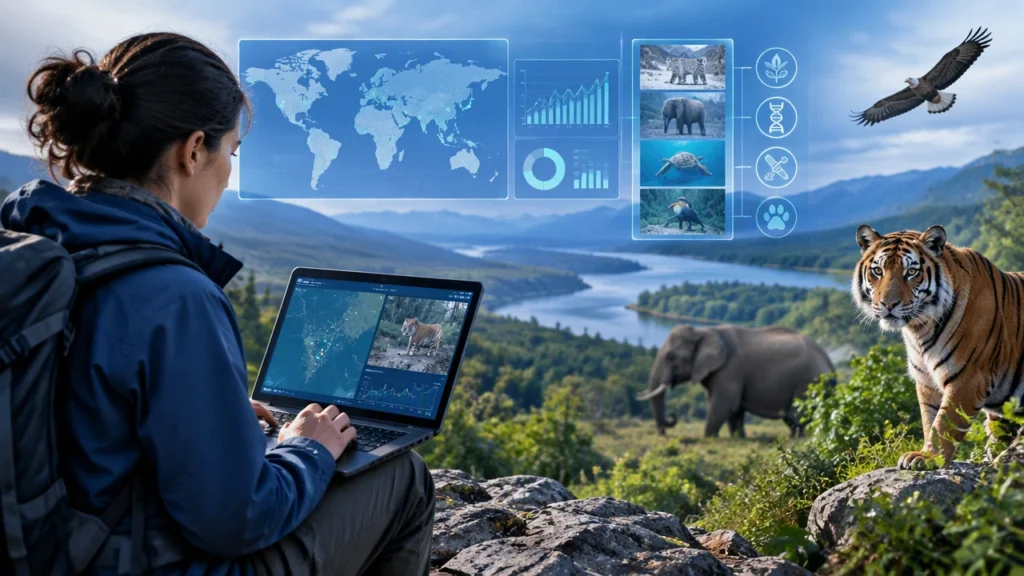
In the field of nauka i badania, few areas carry as much urgency and promise as conservation biology. As habitats shrink, climates shift, and species face mounting pressures, researchers and practitioners are turning to sophisticated, data-driven strategies to safeguard biodiversity. Understanding how science helps biodiversity conservation efforts reveals not only the scale of the challenges we face but also the remarkable tools and methodologies that offer real hope for protecting endangered species and preserving the ecosystems on which all life depends.
The Growing Need for Evidence-Based Conservation
Biodiversity is the foundation of healthy ecosystems. From pollinators sustaining agriculture to forests regulating climate, the variety of life on Earth provides services that communities and economies rely upon daily. Yet species are disappearing at rates far exceeding natural background extinction levels. Habitat loss, overexploitation, invasive species, pollution, and climate change all contribute to this accelerating crisis.
Traditional conservation approaches, while valuable, often relied on limited observations and reactive decision-making. Today, the complexity and speed of environmental change demand a more rigorous, systematic approach. Conservation biology has evolved into a discipline that integrates ecology, genetics, data science, and policy to produce actionable knowledge. This shift toward evidence-based practice ensures that有限 resources are directed where they can achieve the greatest impact.
Data Collection and Monitoring Technologies
Modern conservation begins with robust data. Researchers now deploy a wide array of technologies to monitor species populations, track habitat changes, and detect emerging threats in near real time.
- Remote sensing and satellite imagery allow scientists to observe deforestation, wetland degradation, and land-use changes across vast landscapes without setting foot on the ground. Platforms analyzing multi-spectral satellite data can flag illegal logging or encroachment within days.
- Camera traps and acoustic sensors provide non-invasive methods for surveying elusive or nocturnal species. Machine learning algorithms trained on thousands of images or sound recordings can automatically identify individual animals, estimate population sizes, and even assess behavioral patterns.
- Environmental DNA (eDNA) sampling has revolutionized aquatic and terrestrial biodiversity assessments. By collecting water, soil, or air samples and analyzing trace genetic material, scientists can detect the presence of rare or cryptic species without ever observing them directly.
- GPS and satellite telemetry enable researchers to follow the movements of migratory species across continents, revealing critical corridors, stopover sites, and areas of high mortality risk.
Together, these tools generate enormous datasets that form the backbone of modern conservation planning and adaptive management.
Genomics and Population Biology
Understanding the genetic health of endangered populations is essential for long-term survival. Conservation genomics uses DNA sequencing to assess genetic diversity, identify populations at risk of inbreeding depression, and inform breeding or translocation programs.
For example, genomic analyses of Florida panther populations revealed critically low genetic diversity, prompting the successful introduction of Texas puma individuals to restore genetic variation and improve overall fitness. Similar approaches are being applied to amphibians, coral species, and countless plant populations worldwide.
Genetic tools also help combat illegal wildlife trade. DNA forensics can trace confiscated animal products back to their geographic origin, strengthening law enforcement efforts and supporting prosecutions under international agreements such as CITES.
Species Distribution Modeling and Predictive Analytics
One of the most powerful applications of data science in conservation is species distribution modeling. By correlating known species occurrences with environmental variables—temperature, precipitation, elevation, vegetation cover—researchers can predict where species are likely to occur across entire regions.
These models serve multiple purposes. They help identify previously unknown populations, forecast how species ranges may shift under climate change scenarios, and prioritize areas for protection. When multiple species models are overlaid, conservation planners can pinpoint biodiversity hotspots where a single protected area can shelter numerous threatened organisms simultaneously.
Predictive analytics extend beyond species ranges. Algorithms now forecast disease outbreaks in wildlife populations, model the spread of invasive species, and estimate the probability of extinction for critically endangered taxa under different management scenarios.
Adaptive Management and Conservation Decision-Support
Data-driven conservation is not a one-time effort but an ongoing cycle of monitoring, analysis, learning, and adjustment. Adaptive management frameworks treat conservation actions as experiments, systematically evaluating outcomes and refining strategies based on evidence.
Decision-support tools translate complex ecological data into formats that managers and policymakers can use. Structured decision-making processes help stakeholders weigh competing objectives—species recovery versus economic development, for instance—and identify solutions that balance ecological integrity with human needs. Conservation planning software such as Marxan and Zonation uses spatial optimization algorithms to design protected area networks that maximize biodiversity coverage while minimizing costs and conflicts.
Collaboration and Global Data Networks
No single research group or agency can monitor all species and ecosystems alone. International collaboration and shared data platforms are critical for scaling conservation science. Initiatives such as the Global Biodiversity Information Facility aggregate occurrence records from museums, universities, and citizen science projects into open-access databases that researchers worldwide can analyze.
Citizen science programs empower millions of people to contribute observations of birds, insects, plants, and marine organisms. When quality-controlled and integrated with professional surveys, these data dramatically expand the spatial and temporal scope of biodiversity monitoring. Platforms like iNaturalist and eBird have generated datasets that underpin hundreds of peer-reviewed studies and directly inform conservation policy.
Challenges and the Path Forward
Despite remarkable progress, significant challenges remain. Data gaps persist for many taxonomic groups, particularly invertebrates, fungi, and tropical species. Integrating data across different formats, scales, and disciplines requires ongoing investment in infrastructure and training. Ensuring that scientific findings translate into effective policy and on-the-ground action demands sustained communication between researchers, communities, and governments.
Artificial intelligence and machine learning offer promising avenues for managing the growing volume of conservation data, automating species identification, and improving the accuracy of predictive models. However, these technologies must be deployed thoughtfully, with attention to bias, transparency, and ethical considerations.
The future of conservation biology lies in deepening the integration of rigorous science with practical action. By continuing to invest in monitoring, research, and collaborative networks, the global community can make informed decisions that protect endangered species and preserve the ecosystems that sustain all life on Earth. Understanding how science helps biodiversity conservation efforts is not merely an academic exercise—it is essential knowledge for anyone committed to a sustainable future.